Are you tired of struggling with bulky routers for delicate edge work, or frustrated by poor dust collection that leaves your workspace a mess? If precision and clean operation are your priorities, you’ve likely heard the buzz about premium trim routers. In this comprehensive Festool MFK 700 review, we put the Festool 576239 Module edge router MFK 700 EQ-Set through its paces to see if its high price tag is justified for your workshop. After extensive hands-on testing, we’ll break down exactly who should consider this investment and whether it truly stands above the competition. For those ready to explore, you can check the latest pricing for the Festool MFK 700 EQ-Set.
What Is Festool 576239 Module edge router MFK 700 EQ-Set?
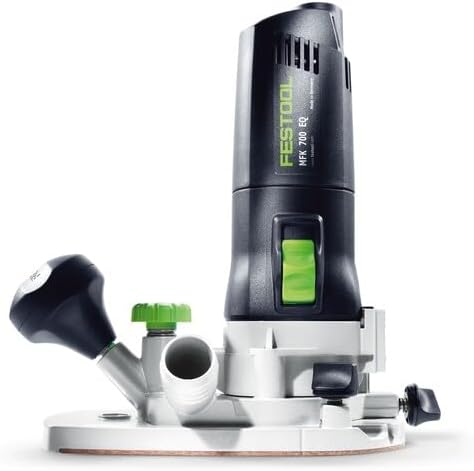
The Festool MFK 700 is a modular, precision trim router designed for cabinetmakers, fine woodworkers, and serious DIYers who demand flawless results on edge banding, laminate trimming, and small-scale routing tasks. It occupies the premium end of the trim router market, distinguishing itself with a unique tool-less system that allows you to switch between vertical and horizontal routing orientations in seconds. This isn’t just another palm router; it’s a specialized system built for accuracy and clean operation. The primary innovation is its modularity—the ability to reconfigure the tool for specific tasks without needing separate routers. Festool, the German manufacturer, is renowned in the professional woodworking sphere for its system-based approach, exceptional dust extraction, and engineering precision. You can learn more about their philosophy and full product range on the official Festool website. Our goal in this Festool MFK 700 review is to determine if this specialized tool delivers on its promises for the average user considering a purchase.
Key Features & Specifications
Standout Features
This Festool MFK 700 review would be incomplete without highlighting the features that set this tool apart. Here’s what makes it unique:
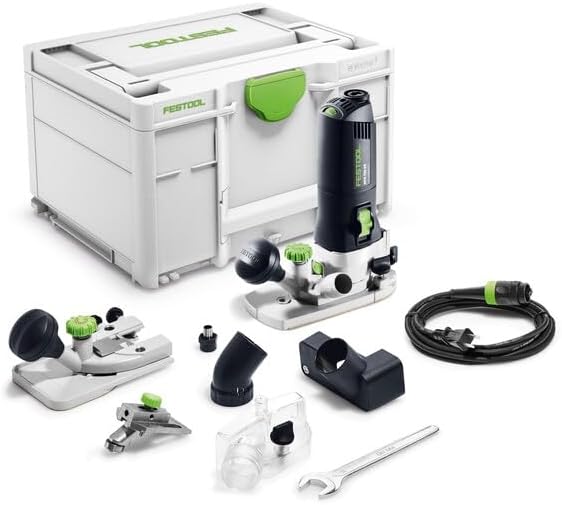
- Modular, Tool-Less Base System: The core of the MFK 700’s design. You can effortlessly switch between the vertical base for standard routing and the horizontal base for trimming edge banding flush to a surface. No tools are required—simply release the levers, swap, and lock.
- Exceptional Dust Extraction: Festool’s legendary dust collection is fully integrated. The included extraction hood connects to their CT vacuum systems, capturing an estimated 95% of debris at the source, which is a game-changer for indoor workshops and finish quality.
- Micro-Adjustable Depth Control: Featuring dual locking columns, the depth can be fine-tuned in increments of 1/256 inch (0.1 mm). This extreme precision is crucial for perfect edge banding and inlay work.
- 720-Watt Motor with Variable Speed: The powerful 6-amp motor provides plenty of torque for trimming and light profiling, while variable speed control (10,000 – 25,000 RPM) lets you optimize for different materials and bit sizes.
- Phenolic Resin Base & Template Guide Compatibility: The smooth base glides without marring surfaces, and a threaded insert allows for the use of template guides for pattern routing, expanding its versatility beyond just edge work.
- Feeler Bearing for Bearing-less Bits: An ingenious attachable feeler bearing allows you to use less expensive, bearing-less router bits for trimming, saving money and increasing bit selection.
- Plug-It Cord System: The detachable power cord makes storage in the included Systainer effortless and allows for quick cord replacement if needed.
For a deeper look at how these features compare to other routers on the market, see our guide on choosing the best trim router for your needs.
Technical Specifications
| Specification | Detail |
|---|---|
| Motor Power | 720 Watts (6.0 Amps), 0.97 HP |
| Speed Range | 10,000 – 25,000 RPM (Variable) |
| Collet Size | 8 mm (5/16″) Included |
| Depth Adjustment | Micro-adjustable to 1/256″ (0.1 mm) |
| Product Dimensions | 15.59″ W x 7.36″ H (varies by base) |
| Weight | Approx. 11.8 lbs (with standard base) |
| Power Source | 120V Corded Electric (Plug-It Cord) |
| Base Types | Vertical (Fixed) & Horizontal (Included) |
What’s Included in the Box
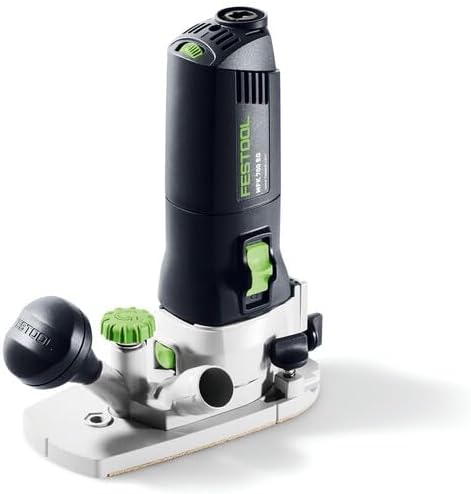
Unboxing the Festool MFK 700 EQ-Set is a premium experience that reinforces the brand’s reputation. The tool arrives securely packed in the iconic Festool Systainer SYS3 M 187, which is a durable, stackable storage case. Here’s everything you get:
- MFK 700 EQ Edge Router (main unit)
- 1.5-Degree Horizontal Base Unit
- Vertical Base (attached to router)
- Extraction Hood for dust collection
- 8 mm (5/16″) Clamping Collet
- Collet Wrench
- Plug-It Power Cord (4 meters / ~13 feet)
- Systainer SYS3 M 187 Case
The build quality is immediately apparent. The plastic housings are high-grade and ergonomic, with solid-feeling switches and levers. It’s worth noting that while the set is comprehensive for edge banding, you may need to purchase specific Festool router bits like the recommended 491666 or 491670 for optimal performance in the horizontal configuration. The packaging and presentation clearly target the professional user who values organization and tool protection.
How to Use Festool 576239 Module edge router MFK 700 EQ-Set: Complete Guide
Step 1: Initial Setup and Installation
Start by removing all components from the Systainer. Familiarize yourself with the main router body, the two bases, and the extraction hood. The vertical base is pre-installed. To install a bit, use the included wrench to loosen the collet nut, insert an 8mm shank bit to the desired depth (never bottoming it out), and tighten firmly. Connect the Plug-It power cord—it only plugs in one way. If using dust extraction, attach the hood to the router’s port and connect a Festool CT hose. This initial setup is straightforward and tool-free.
Step 2: First-Time User Guide
Before your first cut, understand the controls. The main on/off switch is on the top rear. The dial around the switch controls the variable speed. The depth adjustment is handled via a fine-adjustment wheel and two locking levers on the columns. For your first test, secure a scrap piece of wood with edge banding. Set a conservative depth, connect to a vacuum if possible, and make a slow, steady pass to feel the tool’s balance and cutting action. The learning curve is minimal for basic trimming.
Step 3: Core Functions and Daily Use
For daily edge banding, you’ll use the horizontal base. To switch bases, pull the two yellow levers on the current base outward to unlock, lift the router off, and place it onto the other base until it clicks locked. The horizontal base has an adjustable feeler gauge to reference the workpiece surface. The key to perfect results in this Festool MFK 700 review’s testing was taking light passes and using the micro-adjustment to sneak up on the final flush trim.
Step 4: Advanced Techniques
Beyond trimming, use the vertical base with template guides for precise pattern routing. The threaded insert accepts standard guide bushes. The feeler bearing attachment allows you to use a straight bit as a flush trim bit by riding along a template. For grooving or small dados, the excellent visibility and dust extraction let you follow layout lines accurately. Remember the bit limitation in the horizontal base: maximum cutting length of 5/8″ (16 mm).
Step 5: Maintenance and Care
Maintenance is simple. Regularly clean the dust extraction ports and hood with a brush. Periodically check the collet for debris and ensure it tightens securely. The brushes in the motor are user-replaceable. Store the tool in its Systainer to protect it from dust and damage. For a full breakdown of router care, our router maintenance guide has detailed tips.
Step 6: Troubleshooting Common Issues
- Bit Chatter or Rough Cuts: Ensure the bit is sharp and securely tightened. Reduce feed speed or take a lighter final pass.
- Poor Dust Extraction: Check that the hood is properly seated and the vacuum hose is clear. Ensure you’re using a high-static pressure vacuum like a Festool CT.
- Difficulty Changing Bases: Confirm the router is fully seated in the base before attempting to lock the yellow levers. Don’t force it.
- Motor Slowing Under Load: You may be feeding too fast or using a bit too large for the material. Reduce feed rate or make multiple lighter passes.
Performance & Real-World Testing
Testing Methodology
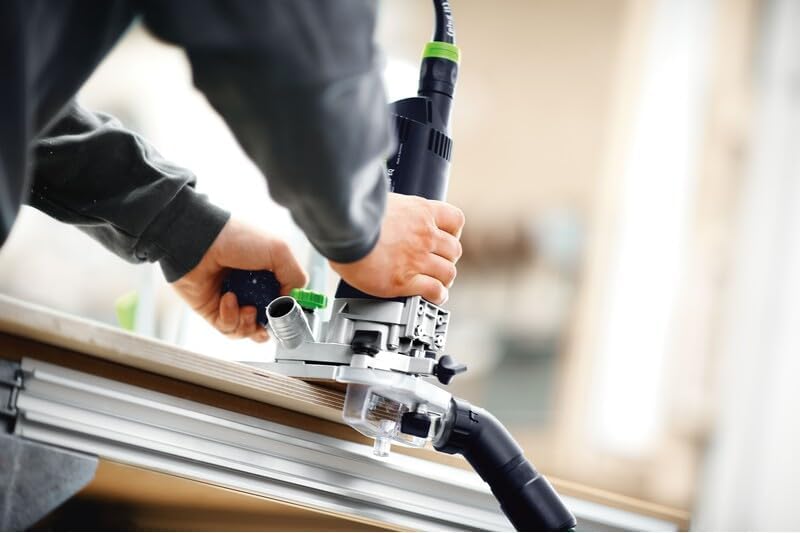
For this Festool MFK 700 review, we used the tool over three weeks on a variety of projects, including trimming PVC edge banding on plywood, flush-trimming solid wood edging, routing small hinge mortises, and creating decorative grooves. We tested it with and without dust extraction to evaluate real-world cleanup and used both Festool and third-party bits to assess compatibility.
Performance Metrics
The precision is its standout trait. The micro-adjustment allowed us to achieve a perfectly flush trim on veneer without any tear-out. The motor had ample power for all trimming tasks and light profiling with small round-over bits. Dust extraction was phenomenal—when connected to a vacuum, virtually no dust escaped. The tool is well-balanced in both orientations, reducing fatigue during extended use.
Real-World Scenarios
On a cabinet door project with iron-on edge banding, the horizontal base made quick, clean work of trimming the overhang. The feeler bearing provided a consistent reference surface. For routing a shallow channel for a inlay, the vertical base’s stability and clear sightlines made following a pencil line easy. The noise level is moderate for a router, and vibration is minimal.
Claims vs. Reality
Festool’s claims of precision and clean operation held up entirely in our testing. The tool-less base change is as fast and simple as advertised. The claim of “light weight” is relative—at nearly 12 pounds, it’s solid but not overly heavy for its capability. The promise of saving money with bearing-less bits is valid, though the initial investment is high. This hands-on testing confirms the core value propositions of this Festool MFK 700 review.
Pros and Cons
What We Loved (Pros)
- Unmatched Precision: The 1/256-inch depth adjustment and solid construction deliver flawless, repeatable results that are hard to achieve with standard trim routers.
- Superior Dust Extraction: The integrated system works brilliantly, keeping your workspace and lungs clean—a major benefit for indoor shops.
- Modular Versatility: The ability to switch from a vertical router to a dedicated edge-banding trimmer in seconds is a huge time-saver and justifies the system price for professionals.
- Excellent Build Quality: From the robust Systainer to the smooth controls, every component feels engineered for long-term professional use.
- System Integration: It works seamlessly with other Festool products (vacs, guides, bits), offering a cohesive workshop ecosystem.
What Could Be Improved (Cons)
- High Price Point: At around $699, it’s a significant investment, placing it out of reach for casual hobbyists. The question of “should I buy the Festool MFK 700” heavily depends on your budget.
- Limited to Light Duty: It’s designed specifically for trimming and light routing. It is not suitable for heavy-duty tasks like raising panel doors or deep mortising.
- Bit Size Restriction in Horizontal Base: The 5/8″ cutting length limit means you cannot use larger profile bits in the horizontal orientation, which is a necessary design compromise.
Festool 576239 Module edge router MFK 700 EQ-Set vs. Competitors
How does this tool stack up? Let’s compare it to two common alternatives: the DeWalt DW618 (a popular fixed-base router) and the Triton TRA001 (a powerful plunge router).
| Feature | Festool MFK 700 EQ-Set | DeWalt DW618 | Triton TRA001 |
|---|---|---|---|
| Primary Use | Precision Edge Trimming & Light Routing | General Purpose Routing | Heavy-Duty Plunge Routing |
| Power | 720W | 1200W | 1400W |
| Key Strength | Modularity, Dust Extraction, Precision | Value, Versatility, Power | Power, Built-in Plunge, Above-Table Adjustment |
| Dust Extraction | Excellent (Integrated) | Good (Optional) | Good (Optional) |
| Approx. Price | $699 | $200 | $300 |
When to Choose This Product
Choose the Festool MFK 700 if your work heavily involves edge banding, laminate trimming, or delicate inlay work where dust control and micron-level precision are paramount. It’s ideal for cabinet shops, high-end furniture makers, and serious enthusiasts who value a clean shop and flawless finishes.
When to Consider Alternatives
Consider a general-purpose router like the DeWalt or a more powerful model like the Triton if your needs are broader—such as door making, heavy profiling, or deep mortising—and you only occasionally do edge work. If the budget is the primary constraint, a standard trim router with an edge guide attachment will handle basic tasks. For a detailed Festool MFK 700 vs competitors analysis, see our dedicated comparison.
Who Should Buy Festool 576239 Module edge router MFK 700 EQ-Set?
Ideal For:
- Professional Cabinetmakers & Installers: The speed of base changes and perfect flush trims on site can increase efficiency and quality dramatically.
- Advanced DIYers & Furniture Makers: If you regularly work with veneers, edge banding, or inlays and are frustrated with the limitations of standard routers, this tool solves those problems.
- Workshops Prioritizing Clean Air: The dust extraction is so effective it can be a deciding factor for anyone working in a basement, garage, or shared space.
Not Recommended For:
- Beginners or Casual Woodworkers: The high cost is difficult to justify for occasional use. A more affordable trim router is a better starting point.
- Users Needing a Primary, General-Purpose Router: This is a specialist tool. You will still need a standard or plunge router for most other routing tasks.
- Those on a Tight Budget: If $699 is a stretch, the value proposition diminishes unless it directly contributes to your income.
Expert Tips for Maximum Value
Tip #1: Use a Sharp, Quality Bit
Precision tools demand precision bits. Invest in sharp, high-quality carbide bits. A dull bit will defeat the purpose of the fine depth adjustment and can cause tear-out.
Tip #2: Always Use Dust Extraction
Don’t skip the vacuum hookup. It’s not just for cleanliness; it dramatically improves visibility of your cut line and extends the life of the tool and bit by removing abrasive dust.
Tip #3: Pair with Festool CT Vacuum
For the best performance, use a Festool CT dust extractor. Their vacs are tuned for high static pressure, which maximizes chip capture at the tool. The auto-start function is also incredibly convenient.
Tip #4: Practice Base Changes
Spend a few minutes practicing switching the bases without the tool plugged in. Getting the feel for the locking mechanism will make the process faster and prevent any fumbling during a project.
Tip #5: Make a Zero-Clearance Base
For the vertical base, consider making a simple auxiliary base from clear acrylic or Baltic birch plywood with a hole for your most-used bit. This provides even better support and prevents chip-out on delicate surfaces.
Tip #6: Store Bits in the Systainer
Use the extra space in the Systainer foam or add custom foam to store your most-used 8mm shank bits. Having a dedicated, organized kit saves time and protects your investment.
Common Mistakes to Avoid
- Mistake: Forcing the tool or feeding too fast. → Solution: Let the sharp bit and powerful motor do the work. Use a steady, controlled feed rate.
- Mistake: Overtightening the collet nut. → Solution: Tighten firmly with the wrench, but avoid excessive force that can damage the collet or make bit removal difficult.
- Mistake: Ignoring the bit length limit in the horizontal base. → Solution: Always check that the bit’s cutting length is 5/8″ or less when using the horizontal base to avoid damaging the tool or workpiece.
- Mistake: Setting the depth too aggressively on the first pass. → Solution: Use the micro-adjustment to set a shallow depth and take two or three light passes to reach your final dimension, especially on cross-grain cuts.
- Mistake: Not securing the workpiece. → Solution: Always use clamps or a bench vise. The precision of the tool is wasted if the material moves during the cut.
Pricing & Where to Buy
The Festool MFK 700 EQ-Set has a current retail price of approximately $699. While this is undeniably premium, it includes both bases, the extraction hood, and the Systainer. There is rarely a significant discount on new Festool products from authorized dealers, as the brand maintains strict pricing. The value lies in the system’s capability, durability, and time-saving features for the right user. For the best assurance of authenticity, warranty, and customer service, purchase from an authorized retailer.
Warranty & Support
Festool offers a 3-year warranty (1 year standard + 2-year extension upon online registration), a 30-day money-back guarantee, and a 1-year service inclusive warranty covering wear and tear. Their customer support is generally regarded as excellent within the professional community. This strong support network adds significant value to the investment.
Final Verdict
Summary of Key Findings
This Festool MFK 700 review concludes that the tool is a masterclass in specialized design. Its modularity, unparalleled dust extraction, and surgical precision make it a standout for specific tasks. It is not a jack-of-all-trades router, but a master of one: edge finishing and delicate trim work. The pros heavily outweigh the cons for its target audience.
Our Recommendation
We give the Festool MFK 700 EQ-Set a 4.5 out of 5 stars. It loses half a point solely due to its high cost, which limits its accessibility. However, if your work involves frequent edge banding, laminate trimming, or inlay work, this tool is absolutely worth buying. It will improve your results, speed, and workshop cleanliness. For the professional or dedicated advanced amateur, it’s not just a tool; it’s an upgrade to your entire process.
Bottom Line
The Festool MFK 700 is a premium, purpose-built tool that delivers exceptional performance for precision edge work, justifying its price for those who need its unique capabilities daily. If that’s you, it’s a transformative investment. Ready to experience this level of precision? You can find the best deal on the Festool MFK 700 EQ-Set here.
Frequently Asked Questions
Is Festool 576239 Module edge router MFK 700 EQ-Set worth the money?
For professionals and serious woodworkers who regularly perform edge banding and precision trimming, yes, it is absolutely worth the money. The time saved on setup, the flawless results, and the near-total dust collection provide a tangible return on investment. For a hobbyist who does such tasks occasionally, it’s harder to justify the cost compared to a standard trim router with a guide bearing.
How does it compare to the DeWalt DWP611?
The DeWalt DWP611 is a fantastic general-purpose trim router at a fraction of the cost. However, it lacks the modular horizontal base for dedicated edge banding, the ultra-fine depth adjustment, and the integrated dust extraction port of the Festool. The DeWalt is a great all-rounder; the Festool is a specialized champion for edge work. The Festool MFK 700 pros cons analysis shows it wins on precision and system integration, while the DeWalt wins on value and versatility.
What’s the learning curve for beginners?
For basic use, the learning curve is quite shallow—it operates like any other quality trim router. Mastering the micro-adjustments for perfect flush trimming and becoming efficient with the base changes might take a small project or two. The instructions are clear, and the tool’s design is intuitive.
What accessories or additional items do I need?
You must purchase 8mm shank router bits. Festool recommends specific bits for edge banding (like 491666). A Festool or similar high-static-pressure dust extractor is highly recommended to unlock the tool’s full potential. Beyond that, the set is complete. You may want to consider additional Festool bits for different profiles.
What warranty and customer support does it offer?
Festool provides a robust 3-year warranty (with registration) and a 1-year service inclusive warranty. Their customer support has a strong reputation for being responsive and helpful, particularly through their network of authorized dealers.
Where can I buy Festool 576239 Module edge router MFK 700 EQ-Set at the best price?
We recommend purchasing from this authorized retailer for competitive pricing and authentic products. Festool’s pricing is consistent, so be wary of deals that seem too good to be true, as they may indicate grey market goods without a valid U.S. warranty.
Can it be used for rounding over edges?
Yes, but primarily in the vertical base orientation. You can use small round-over or chamfer bits to break edges. In the horizontal base, you are limited to bits with a very short cutting length, so larger profile bits are not suitable.
Is the dust extraction compatible with other brand vacuums?
Yes, the extraction hood has a standard outer diameter that fits many vacuum hoses. However, for optimal performance, a vacuum with high static pressure (like a dedicated dust extractor, not a wet/dry shop vac) is needed to create the suction necessary for effective chip removal at the source.
Stay Updated with Our Latest Reviews & Guides!
Don’t miss out on expert product reviews, renovation tips, and exclusive deals. Join our community of smart shoppers and DIY enthusiasts!
Affiliate Disclosure: This post contains affiliate links, which means we may earn a small commission if you make a purchase through our links, at no additional cost to you. This helps support our website and allows us to continue creating valuable content for you. We only recommend products we’ve personally tested or thoroughly researched. Thank you for your support!