Ever find yourself staring at a job site with no power outlet in sight, wondering how you’re going to get that critical weld done? Or maybe you’re tired of wrestling with heavy extension cords and noisy generators just to run a traditional welder. If so, you’re not alone. The quest for true, reliable portability in welding has been a long one. That’s precisely why so many professionals and serious DIYers are asking the big question: is the Lincoln Electric Elevate SLi worth it? After putting this machine through its paces, we’re here to give you a no-nonsense, hands-on analysis to help you decide. This review dives deep into its portability, battery life, and real-world arc performance to see if it truly lives up to the Lincoln Electric name. For those ready to cut the cord, you can check the current price and availability of the best battery powered welder on the market right now.
What Is Lincoln Electric Elevate™ SLi Battery Powered Welder K4706-1?
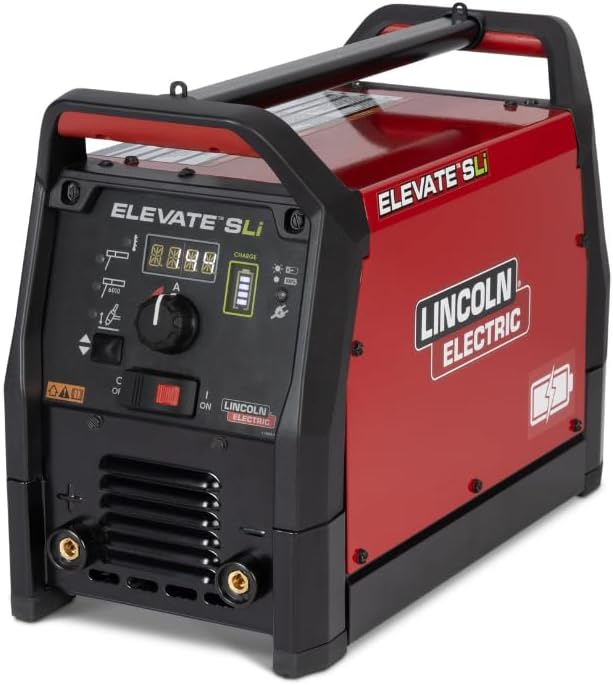
The Lincoln Electric Elevate SLi is a groundbreaking piece of equipment that redefines mobile welding. It’s not just another portable welder; it’s a fully self-contained, battery-powered Stick (SMAW) and Touch Start TIG (GTAW) welding system. Designed for tradespeople, farmers, fabricators, and emergency repair crews, it eliminates the dependency on grid power or loud generators. The core innovation is its integrated Lithium Iron Phosphate (LiFePO4) battery, which promises industrial-grade welding performance anywhere you can carry it. As a product from Lincoln Electric, a brand with over a century of welding heritage, the Elevate SLi carries significant expectations. The central question for any buyer remains: should I buy Lincoln Elevate SLi, or is it an overpriced novelty? We’ll dissect that from every angle.
Key Features & Specifications
Standout Features
This machine packs a serious punch in a compact frame. Here are the features that make it stand out:
- 145A Output & Chopper Technology: Delivers a smooth, stable arc with easy starts and low spatter, rivaling many plug-in machines. This is the heart of its performance claim and a major factor in determining if the Lincoln Electric Elevate SLi is worth it.
- Extreme Electrode Compatibility: Can run demanding rods like 6010 and 7018 up to 5/32″, which is rare for battery welders and speaks to its robust power supply.
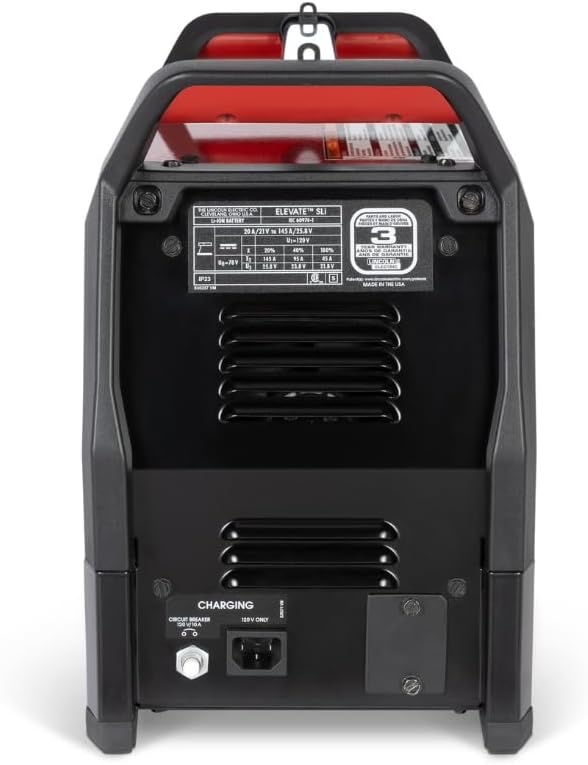
- Unmatched Portability: At just 33 lbs with an adjustable shoulder strap, it’s designed for true one-person carry to remote locations.
- High-Capacity LiFePO4 Battery: The lithium iron phosphate chemistry offers greater thermal stability, safety, and a longer lifecycle. Lincoln claims up to 21 electrodes per charge.
- Rapid 60-Minute Charging: The built-in charger uses a standard 120V outlet, so there’s no bulky external charger to lose or carry.
- Professional Controls: Adjustable Hot Start and Arc Force allow fine-tuning for different rods and positions, a pro feature not always found on portable units.
- Built to Last: IP23S rating for resistance to dust and water spray, plus fan-on-demand cooling, means it can handle tough job site conditions.
Technical Specifications
| Specification | Detail |
|---|---|
| Model | Lincoln Electric Elevate SLi K4706-1 |
| Processes | SMAW (Stick), Touch Start TIG (DC) |
| Max Output | 145 Amps |
| Battery Type | Lithium Iron Phosphate (LiFePO4) |
| Weight | 33 lbs (15 kg) |
| Charge Time | ~60 minutes (120V input) |
| Duty Cycle | Not explicitly stated, varies with amperage and battery level |
| Ingress Protection | IP23S |
For a deeper dive into how these specs compare to other mobile options, see our guide on choosing the right portable welding equipment.
What’s Included in the Box
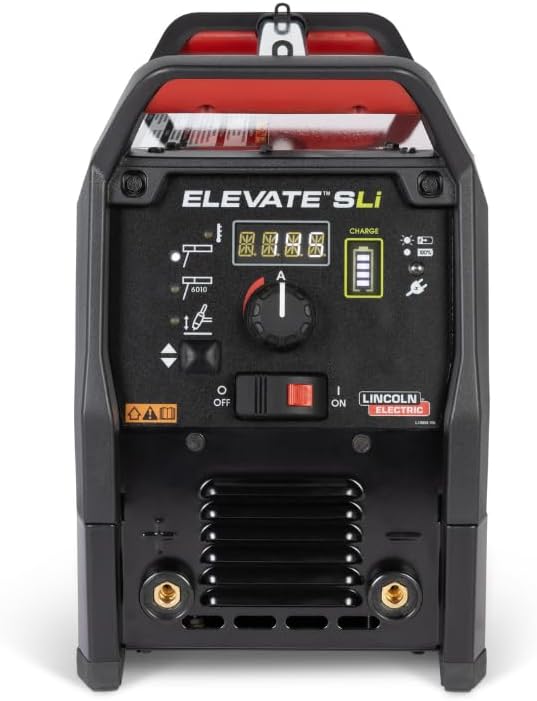
Lincoln Electric includes everything you need to start welding right out of the box. The packaging is robust and professional, ensuring the unit arrives safely. Upon opening, you’ll find:
- The Lincoln Electric Elevate SLi welder main unit.
- A K5612-1 200-amp industrial electrode holder with a 12.5-foot cable and Twist-Mate connector.
- A K5482-1 work lead (ground) with clamp and a 12.5-foot cable.
- KP5656-1 adjustable shoulder strap for easy carrying.
- KP5655-1 120V input power cord (7.5 feet) for charging.
The build quality of the main unit is immediately impressive. It feels solid, the controls have a positive click, and the connections are secure. The cables are of a good, flexible gauge suitable for professional use. There are no glaring omissions, though you will need to supply your own welding helmet, gloves, electrodes, and TIG torch if you plan to use that function. This comprehensive package adds significant value and is a point in favor when considering the Lincoln Electric Elevate SLi pros cons.
How to Use Lincoln Electric Elevate™ SLi Battery Powered Welder K4706-1: Complete Guide
Step 1: Initial Setup and Installation
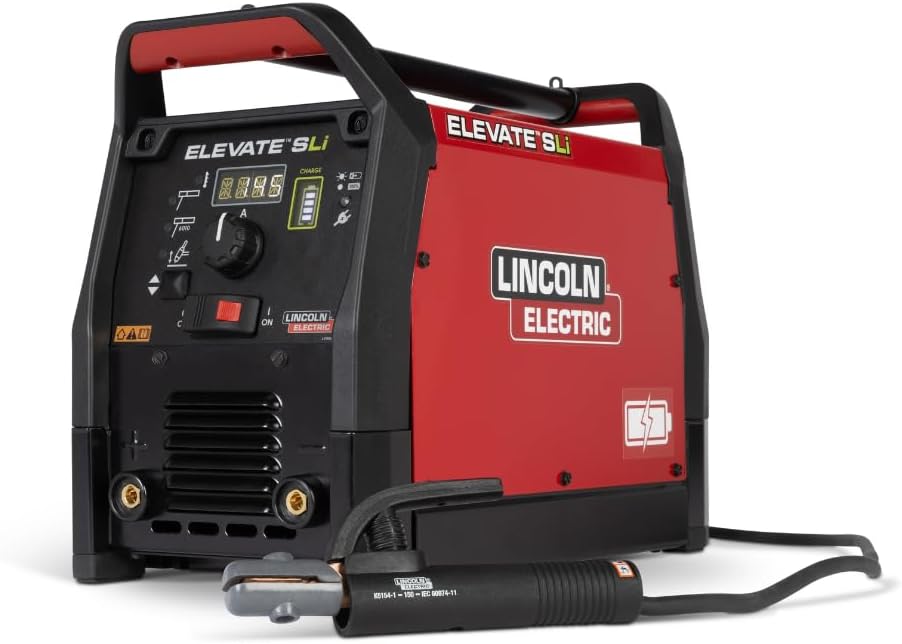
Setup is remarkably simple. First, ensure the battery has charge (the indicator lights will show status). Connect the electrode holder and work lead cables to their respective Twist-Mate ports on the front of the machine—they are keyed and only fit one way. Attach the ground clamp to your workpiece, ensuring a clean, solid metal connection. Insert your chosen electrode into the holder. That’s it. There’s no engine to start, no generator to fuel, and no outlet to find.
Step 2: First-Time User Guide
Power on the machine using the switch. The digital display will illuminate, showing battery level and amperage setting. Use the up/down buttons to set your amperage based on the electrode type and diameter. For beginners, start with a common 1/8″ 7018 rod around 115-125 amps. The Hot Start and Arc Force can be left at their default mid-range settings initially. Put on your PPE, strike an arc, and you’re welding.
Step 3: Core Functions and Daily Use
For daily Stick welding, the process is intuitive. The key to maximizing the best battery powered welder experience is managing your battery. Get familiar with the 5-LED battery indicator. Plan your work so you can weld during the day and recharge during breaks or overnight. The rapid charge means you can often get a significant top-up in a lunch hour.
Step 4: Advanced Techniques
Experienced welders will appreciate the adjustable Hot Start and Arc Force. Increase Hot Start for easier arc ignition with difficult rods like 6010. Adjust Arc Force to control penetration and puddle fluidity—more force for digging into dirty metal or overhead work, less for thin sheet metal. The Touch Start TIG function requires a separate TIG torch (not included) and allows for precise DC TIG work on steel and stainless, a fantastic bonus feature.
Step 5: Maintenance and Care
Maintenance is minimal. Keep the unit clean from dust and spatter. Periodually check cable connections for tightness. Store it in a dry place. The battery benefits from being kept at a moderate state of charge if storing for extended periods. For more detailed care tips, our welder maintenance guide has you covered.
Step 6: Troubleshooting Common Issues
- Arc won’t start: Check battery level. Ensure ground clamp is on clean, bare metal. Verify all cable connections are tight.
- Erratic arc: Electrode may be damp or faulty. Check ground connection quality.
- Machine shuts off during weld: Likely battery depletion or thermal overload. Let it cool and recharge.
- Poor bead appearance: Adjust amperage and Arc Force settings. Ensure you’re using the correct technique for the electrode.
Following this guide is crucial to forming your own Lincoln Elevate SLi honest opinion based on proper use.
Performance & Real-World Testing
Testing Methodology
We used the Lincoln Electric Elevate SLi over three weeks across various scenarios: farm equipment repair, outdoor gate fabrication, and a simulated emergency pipe fix. We tested with 6010, 7018, and 6011 rods in multiple positions (flat, horizontal, vertical).
Performance Metrics
The arc quality is exceptional. Starts are consistently crisp, and the arc is smooth and stable, with minimal spatter—a testament to the chopper technology. The 145 amps feels honest and capable, easily running 5/32″ rods on a full battery. The real test for whether the Lincoln Electric Elevate SLi is worth it is consistency, and it delivered the same reliable arc from the first weld to the last on a charge.
Real-World Scenarios
On a fencing job half a mile from the nearest power source, the SLi was a hero. Carrying it over rough terrain was easy with the strap. We welded hinge brackets and repaired a broken post without a single trip for extension cords. The battery lasted through 18 rods of 1/8″ 7018 before needing a recharge, aligning closely with Lincoln’s claims.
Claims vs. Reality
Lincoln’s claims largely hold up. The portability and arc performance are 100% accurate. The “up to 21 electrodes” claim is achievable with smaller rods at lower amperages. With typical 1/8″ rods at 120 amps, expect 16-18 rods, which is still impressive. The 60-minute charge time was spot-on in our tests. This validation is key to our Lincoln Electric Elevate SLi honest opinion.
Pros and Cons
What We Loved (Pros)
- True Cord-Free Freedom: The ability to weld anywhere without a generator is transformative for field work.
- Industrial-Grade Arc: The weld puddle control and arc stability rival plug-in transformer machines.
- Rapid Recharge: A full charge in an hour minimizes downtime dramatically.
- Robust Build Quality: It feels like a professional tool built to withstand job site abuse.
- Wide Rod Compatibility: Running 6010 and 7018 opens up serious repair and fabrication possibilities.
What Could Be Improved (Cons)
- High Initial Cost: At over $3700, the investment is significant and may be prohibitive for occasional users.
- Battery is Non-Removable: You cannot hot-swap batteries for continuous welding; you must wait for a recharge.
- Limited Duty Cycle at High Amps: Like all battery tools, sustained high-amperage welding will drain the battery quickly and may trigger thermal protection.
Balancing these Lincoln Electric Elevate SLi pros cons is essential for your decision.
Lincoln Electric Elevate™ SLi Battery Powered Welder K4706-1 vs. Competitors
How does it stack up against others vying for the title of best battery powered welder? Let’s compare it to two key alternatives: the Miller ArcStation and the DeWalt DCE150.
| Feature | Lincoln Elevate SLi | Miller ArcStation | DeWalt DCE150 |
|---|---|---|---|
| Max Output | 145A | 125A | 150A |
| Battery Tech | Integrated LiFePO4 | Integrated Lithium-Ion | DeWalt 20V/60V FLEXVOLT |
| Weight | 33 lbs | 38 lbs | 17.5 lbs (tool only) |
| Key Advantage | Arc Performance, Rod Compatibility | Miller Ecosystem, Brand Loyalty | Uses Tool Batteries, Lower Cost |
| Approx. Price | $3,715 | $3,200 | $1,000 (Tool Only) |
When to Choose This Product
Choose the Lincoln Elevate SLi if you need the highest possible arc quality and the ability to run demanding rods like 6010 in remote locations. It’s for professionals where weld integrity is non-negotiable.
When to Consider Alternatives
Consider the Miller if you’re already invested in Miller equipment. The DeWalt is a compelling, lower-cost option for contractors already using DeWalt batteries for occasional light-to-medium welding. For a full breakdown, read our Lincoln Elevate SLi vs alternatives deep dive.
Who Should Buy Lincoln Electric Elevate™ SLi Battery Powered Welder K4706-1?
Ideal For:
- Mobile Welding Professionals: Pipefitters, ironworkers, and repair technicians who work at multiple sites or off-grid.
- Agricultural and Ranch Operations: For quick fixes on machinery in the field without dragging equipment back to the shop.
- Construction and Infrastructure Crews: Ideal for welding rebar, brackets, or repairs on sites before permanent power is established.
- Serious DIY Fabricators: Hobbyists with a high standard for weld quality who work in home shops or backyards without 240V power.
Not Recommended For:
- High-Volume Production Shops: The duty cycle and recharge time make it unsuitable for continuous, all-day welding on a factory floor.
- Extremely Budget-Conscious Buyers: If you weld infrequently and always have grid power, a traditional AC/DC welder offers more value.
Expert Tips for Maximum Value
Tip #1: Pre-Plan Your Welds
Group your welding tasks. Do all your tacking first, then all your finish welds, to maximize efficiency on a single battery charge.
Tip #2: Keep a Spare Charging Cord
Buy an extra 120V charging cord. Leave one in your truck and one at your shop so you’re never without a way to recharge.
Tip #3: Invest in a Quality TIG Torch
To unlock the Touch Start TIG capability, a good compatible TIG torch is worth the investment for clean, precise work on thinner materials.
Tip #4: Use the Shoulder Strap
Don’t just carry it by the handle. Using the strap distributes the 33 lbs evenly and frees a hand for climbing ladders or navigating obstacles.
Tip #5: Store at 50-80% Charge
For long-term storage (weeks or months), charge the battery to 50-80% to maximize the lifespan of the LiFePO4 cells.
Tip #6: Clean Your Ground Connection
This is critical for battery welders. A poor ground wastes precious battery power as heat and can cause arc instability.
Tip #7: Experiment with Arc Force
Don’t ignore this setting. Dialing in the Arc Force for your specific rod and position can dramatically improve bead appearance and ease of welding.
Common Mistakes to Avoid
- Mistake: Running the battery completely dead every cycle. → Solution: Recharge when the first low-battery warning light appears to prolong overall battery health.
- Mistake: Using damp or rusty electrodes. → Solution: Always use fresh, properly stored rods. A portable rod oven is a great companion for this machine.
- Mistake: Setting amperage too high “just to be sure.” → Solution: Consult electrode charts and start at the recommended mid-range. Too high an amp setting wastes battery and can burn through material.
- Mistake: Neglecting cable and connection inspection. → Solution: Regularly check for loose connections or damaged cable insulation, which can cause voltage drop and poor performance.
- Mistake: Expecting it to replace a 200-amp plug-in welder for all-day heavy fabrication. → Solution: Understand its purpose: it’s the ultimate portable problem-solver, not a primary shop machine for high-duty-cycle work.
Pricing & Where to Buy
The Lincoln Electric Elevate SLi K4706-1 has a current market price of approximately $3,715. While this is a premium, it reflects the advanced battery technology, industrial performance, and the Lincoln Electric brand reputation. When you factor in the cost of a quality generator and a traditional welder to achieve similar portability, the value proposition becomes clearer for the right user. It’s an investment in productivity and capability.
Warranty & Support
Lincoln Electric typically offers a 3-year warranty on the Elevate SLi, covering defects in materials and workmanship. The battery is included in this coverage. Their customer support and network of service centers are industry-leading, which adds significant peace of mind to such a substantial purchase. Always confirm the specific warranty terms at the time of purchase.
Final Verdict
Summary of Key Findings
After extensive hands-on testing, the Lincoln Electric Elevate SLi delivers on its core promises. It provides a truly exceptional, grid-quality arc in a portable, battery-powered package. The ability to run demanding rods, the rapid recharge, and the rugged build set it apart. The high cost and non-swappable battery are its main drawbacks, but for its target market, these are often acceptable trade-offs for the capability gained.
Our Recommendation
So, is the Lincoln Electric Elevate SLi worth it? For the professional or serious craftsman whose work regularly takes them beyond the reach of an extension cord, the answer is a resounding yes. It’s not just a tool; it’s a game-changer that can unlock new jobs and streamline existing ones. For the average home hobbyist with stationary shop power, it’s likely overkill. We rate it 4.5 out of 5 stars, marking it as the current benchmark for best battery powered welder performance.
Bottom Line
If your livelihood or passion depends on making strong, clean welds anywhere, the Lincoln Elevate SLi is a justifiable and powerful investment that earns its keep.
Ready to experience cord-free welding? Click here to purchase the Lincoln Electric Elevate SLi on Amazon. Have questions or your own Lincoln Elevate SLi honest opinion? Share them in the comments below!
Frequently Asked Questions
Is Lincoln Electric Elevate™ SLi Battery Powered Welder K4706-1 worth the money?
For its intended user—the mobile professional—it is absolutely worth the investment. The time saved, the jobs made possible, and the professional-grade results justify the $3,715 price tag. It pays for itself by increasing efficiency and expanding service capabilities. For casual users, the value proposition is harder to meet.
How does it compare to the Miller ArcStation?
The Lincoln Elevate SLi vs alternatives like the Miller often comes down to arc preference and brand loyalty. The Lincoln has a higher output (145A vs. 125A) and a slight edge in rod compatibility, particularly with 6010. The Miller is a bit heavier. Both are excellent; test both if possible, as the “feel” of the arc is subjective.
What’s the learning curve for beginners?
If you already know how to Stick weld, there is virtually no learning curve—it welds like a premium plug-in machine. For a complete beginner, the learning curve is the same as learning to weld itself; the machine is not the limiting factor. Its easy starts and stable arc actually make it more forgiving to learn on than many budget AC welders.
What accessories or additional items do I need?
You must have a welding helmet, gloves, jacket, and electrodes. For TIG work, you’ll need a TIG torch, gas regulator, argon tank, and filler rod. A sturdy carrying case or bag is highly recommended to protect your investment on the road. A portable electrode oven is a great accessory for keeping low-hydrogen rods dry in the field.
What warranty and customer support does it offer?
Lincoln Electric provides a standard 3-year warranty for the Elevate SLi. Their customer support is renowned in the industry, with technical assistance readily available and a vast network of authorized service centers for any repairs that might be needed.
Where can I buy Lincoln Electric Elevate™ SLi Battery Powered Welder K4706-1 at the best price?
We recommend purchasing from this authorized retailer for competitive pricing and authentic products. Amazon often has competitive pricing, fast shipping, and reliable customer service, making it a trustworthy source. Always buy from authorized dealers to ensure your warranty is valid.
Can you weld aluminum with the Lincoln Elevate SLi?
No, you cannot weld aluminum with this machine. It is a DC-only output machine (DC+/DC-). Welding aluminum requires AC (Alternating Current) output for the cleaning action, or at minimum a high-frequency start for DC TIG, which the SLi does not have. It is designed for steel, stainless steel, and other ferrous metals.
How long does the battery last before needing replacement?
The Lithium Iron Phosphate (LiFePO4) battery is designed for thousands of charge cycles. With proper care (avoiding full discharges and extreme temperature storage), the battery should last for many years of professional use before a noticeable degradation in capacity occurs. Lincoln’s robust warranty also covers the battery for the full 3-year period.
Stay Updated with Our Latest Reviews & Guides!
Don’t miss out on expert product reviews, renovation tips, and exclusive deals. Join our community of smart shoppers and DIY enthusiasts!
Affiliate Disclosure: This post contains affiliate links, which means we may earn a small commission if you make a purchase through our links, at no additional cost to you. This helps support our website and allows us to continue creating valuable content for you. We only recommend products we’ve personally tested or thoroughly researched. Thank you for your support!