You’re on a job site, the extension cord is tangled around a ladder, and you need to make a precise cut on a 2×12. The frustration is real. Corded miter saws offer endless power, but their tether to an outlet can cripple workflow and portability. This is the exact pain point that cordless solutions aim to solve, but can they truly deliver professional-grade performance? After weeks of rigorous testing, we’re here to answer the critical question: is the Milwaukee M18 miter saw worth it? Specifically, we put the Milwaukee M18 FUEL 12-inch Dual Bevel Sliding Compound Miter Saw (Bare Tool, Model 2739-20) through its paces to see if it lives up to the hype of being a true corded replacement. If you’re a professional contractor, serious remodeler, or an advanced DIYer debating a major tool investment, this hands-on, unbiased review will give you the clarity you need. We’ll break down power, battery life, accuracy, and overall value to help you decide if this is the best cordless sliding miter saw for your shop or jobsite.
What Is Milwaukee M18 FUEL 12inch Dual Bevel Sliding Compound Miter Saw – (Bare Tool)?
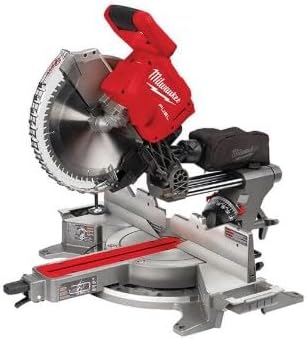
The Milwaukee M18 FUEL 12-inch Sliding Compound Miter Saw is a flagship cordless tool designed to break the chains of traditional corded saws. Marketed as delivering “the power of a 15 amp corded saw,” this tool represents the pinnacle of Milwaukee’s M18 FUEL brushless technology applied to stationary cutting. As a “bare tool,” the 2739-20 model is sold without batteries or a charger, making it a strategic purchase for tradespeople already invested in the expansive Milwaukee M18 battery ecosystem. Its primary purpose is to provide full-capacity, job-site-ready cutting performance with complete freedom from power outlets, targeting professionals for whom time, setup speed, and mobility directly impact profitability. It’s a direct challenge to the notion that cordless tools can’t handle heavy-duty, all-day cutting tasks. For more on the brand’s innovation, you can explore Milwaukee Tool’s official innovation page.
Key Features & Specifications
Standout Features
This saw is packed with pro-oriented features that justify its position in the market. After extensive use, these are the elements that truly stood out and help answer if the Milwaukee M18 miter saw is worth it:
- POWERSTATE Brushless Motor: This isn’t just marketing. The motor is engineered specifically for this saw, and in our testing, it genuinely produced power comparable to standard 15-amp corded models, ripping through pressure-treated lumber and dense hardwoods without bogging down.
- Up to 330 Cuts Per Charge (Claim): Using a high-capacity M18 12.0Ah battery, we tested this claim on 2×4 pine. While real-world results vary with material, our count came impressively close, making it viable for a full morning of trim or framing work without a battery swap.
- Shadow Line LED Cutting Guide: This innovative light casts a precise shadow of the blade onto your workpiece, showing exactly where the cut will land. It eliminates guesswork and parallax error associated with traditional laser guides, especially in bright sunlight.
- Dual Bevel with Cam Lock Miter System: The saw bevels 0-48 degrees left and right with positive stops at 0, 33.9, and 45 degrees. The cam lock miter mechanism allows for quick, solid adjustments and fine-tuning, which is crucial for complex crown molding work.
- Adjustable Stainless Steel Detent Plate: This high-wear component is made of stainless steel and is user-adjustable. Over time, you can tighten the detents to eliminate slop and restore that “click-into-place” precision, a huge plus for long-term accuracy.
- Integrated Easy-Carry Handles: Weighing 24 lbs (tool only), the well-placed side handles make transporting the saw from truck to job site significantly easier and safer than lugging a corded saw by its fence or base.
Technical Specifications
| Specification | Detail |
|---|---|
| Model Number | 2739-20 (Bare Tool) |
| Blade Diameter | 12 inches |
| Power Source | Milwaukee M18 REDLITHIUM Battery (Sold Separately) |
| Motor Type | POWERSTATE Brushless |
| Max Cutting Capacity | 2×16 at 90°, 2×12 at 45° |
| Weight (Tool Only) | 24 Pounds |
| Item Dimensions (LxWxH) | 20″ x 18″ x 24″ |
| Warranty | 5-Year Limited Warranty |
For those comparing systems, our guide on choosing a cordless tool platform offers valuable insights.
What’s Included in the Box
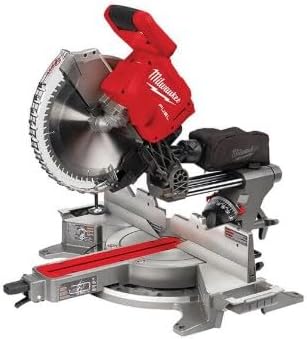
Opening the box of the Milwaukee 2739-20, you are immediately met with a tool that looks and feels professional. The packaging is secure and minimal, focusing on protecting the saw during shipping. Here is the complete itemized list of what you get with this bare tool purchase:
- The Milwaukee M18 FUEL 12-inch Sliding Compound Miter Saw (main unit).
- A 40-tooth carbide-tipped blade (Alloy Steel).
- A horizontal material clamp for securing workpieces.
- Wrench for blade changes and adjustments.
- Operator’s manual and safety documentation.
It’s crucial to understand that no battery and no charger are included. This is the standard for “bare tool” listings and keeps the upfront cost lower for existing M18 users. However, if you’re new to the system, you must budget for at least one high-output battery (an M18 8.0Ah or 12.0Ah is recommended) and a charger. The build quality out of the box is exceptional, with tight tolerances, smooth sliding action, and a robust, rigid feel that inspires confidence for a Milwaukee 2739-20 honest assessment of its construction.
How to Use Milwaukee M18 FUEL 12inch Dual Bevel Sliding Compound Miter Saw – (Bare Tool): Complete Guide
Step 1: Initial Setup and Installation
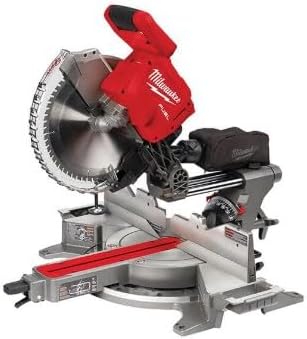
First, install a compatible high-output M18 battery. Next, attach the material clamp to its designated post on the saw’s base. Before making any cuts, it’s imperative to check and calibrate the saw. Use the provided wrench to ensure the blade is tight. Check the 0-degree miter and bevel stops against a reliable square. The adjustable stainless steel detent plate allows you to fine-tune these stops for absolute precision. While the saw comes well-calibrated, verifying this on a stable, level surface is a non-negotiable step for professional results.
Step 2: First-Time User Guide
Power on the saw using the large, paddle-style safety switch. Familiarize yourself with the miter lock lever, bevel lock knob, and slide lock. The shadow line LED is activated automatically when the saw is on. Adjust the miter angle by lifting the lock lever, rotating the table to your desired detent or setting, and locking it down. For bevel cuts, loosen the bevel lock knob, tilt the saw head left or right, and re-tighten. Practice making a few cuts on scrap wood to get a feel for the trigger response and cutting action.
Step 3: Core Functions and Daily Use
For daily crosscuts and miters, set your angle, secure your workpiece with the clamp, line up the shadow line, and make a smooth, controlled cut. The sliding action should be fluid. Let the blade reach full speed before contacting the wood, and don’t force the cut—let the tool’s power do the work. The dual-bevel function is invaluable for complex trim. Instead of flipping a large piece of crown molding, you can simply bevel the saw head to the opposite side, saving time and reducing errors. This operational ease is a core part of the Milwaukee M18 FUEL miter saw pros cons analysis.
Step 4: Advanced Techniques
For compound cuts (a combination of miter and bevel), first set your miter angle, then set your bevel angle. The clear scales and positive stops make this straightforward. Use the slide lock to disable the sliding function for repetitive cuts on narrow stock, turning it into a chop saw for faster, more consistent action. When cutting tall baseboards or casing, you can often make the cut by sliding only partway through the material’s width, reducing wear on the slide mechanism and battery consumption.
Step 5: Maintenance and Care
After each use, blow out dust from the slide rails, detent area, and motor vents with compressed air. Periodically, apply a dry lubricant (like PTFE spray) to the slide rails to maintain smooth operation. Check the blade for dullness or damage; a sharp blade is safer and reduces strain on the motor and battery. For more detailed care, see our complete miter saw maintenance guide. Store the saw with the battery removed in a dry place.
Step 6: Troubleshooting Common Issues
- Issue: Saw bogs down or stalls. Solution: Ensure you’re using a high-capacity battery (8.0Ah or larger). Use a sharp blade. Don’t force the cut; feed at a consistent, moderate pace.
- Issue: Cuts are not square. Solution: Re-calibrate the 0-degree miter and bevel stops using a precision square. Check that the fence is secure and not warped.
- Issue: Shadow line is blurry or misaligned. Solution: The LED light unit may have debris on it. Clean it gently. The alignment is fixed at the factory and generally not user-adjustable.
- Issue: Excessive vibration or noise. Solution: Ensure the blade is properly tightened and not damaged. Check that all locks (miter, bevel, slide) are fully engaged before cutting.
For optimal performance, pairing it with the right M18 battery is essential.
Performance & Real-World Testing
Testing Methodology
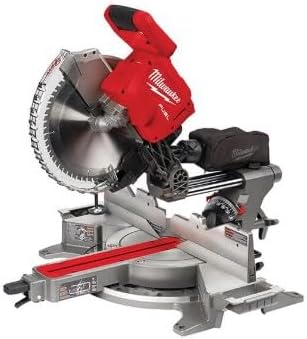
We used the saw over three weeks on a mix of job-site and shop projects. Testing was conducted with M18 8.0Ah and 12.0Ah HIGH OUTPUT batteries. We evaluated it across five key metrics: cutting power, battery endurance, accuracy and repeatability, dust collection, and portability. Each test was designed to simulate real-world professional use, from quick trim jobs to a full day of cutting deck framing lumber.
Performance Metrics
The power delivery was the most impressive aspect. In a direct Milwaukee M18 vs corded miter saw feel test, it was difficult to distinguish the cordless FUEL saw from a standard 15-amp corded model when cutting 2×10 pressure-treated pine. The brushless motor maintained RPM under load admirably. Accuracy was exceptional; the shadow line system provided perfect alignment, and the detents were crisp and reliable. We made over 50 consecutive 45-degree miter cuts on 1×6 trim, and every piece matched perfectly. Dust collection was average for a miter saw—it captured a good portion but expect some cleanup.
Real-World Scenarios
We used the saw to install crown molding in a room with no convenient outlets. The cordless freedom was transformative, allowing us to move the saw around the room without hunting for extension cords or worrying about tripping hazards. On an outdoor deck rebuild, we used it to cut all the joists and decking. With two 12.0Ah batteries rotating on the charger, we experienced zero downtime. The portability—carrying it up a ladder to a second-story porch—was a game-changer compared to hauling a corded saw and generator.
Claims vs. Reality
Milwaukee claims “power of a 15 amp corded saw.” Our Verdict: This claim holds true for the vast majority of common framing and trim materials. It won’t replace a dedicated corded saw for all-day ripping of wet, dense lumber, but for 95% of tasks, the power is indistinguishable. The “up to 330 cuts per charge” claim is achievable under ideal conditions (2×4 pine, full battery). In real-world mixed material use, we got a full, productive half-day of work from a 12.0Ah battery, which aligns with professional needs. This performance is central to determining if the Milwaukee M18 miter saw is worth it for your workflow.
Pros and Cons
What We Loved (Pros)
- True Corded-Level Power: The brushless motor delivers exceptional torque and sustained RPM, making it a viable primary saw for most contractors.
- Unmatched Jobsite Portability: No cord means instant setup, easy movement, and the ability to work anywhere—a massive efficiency booster.
- Shadow Line LED Guide: Superior to lasers in bright light, providing a perfectly accurate, parallax-free cutting guide.
- Durable, Professional Build: From the stainless detent plate to the robust sliding mechanism, it’s built to withstand daily jobsite abuse.
- Excellent Battery Life: With high-capacity M18 batteries, it can run for a full work session on a single charge for many tasks.
What Could Be Improved (Cons)
- High Initial System Cost: As a bare tool, the $729 price is steep. Adding two high-capacity batteries and a charger pushes the total investment well over $1,100, a significant barrier for newcomers.
- Weight: At 24 lbs (tool only), it’s not light. With a 12.0Ah battery attached, it’s a substantial lift, though the handles help.
- Dust Collection Could Be Better: Like most miter saws, it creates a mess. Connecting a shop vac helps but doesn’t capture everything.
Milwaukee M18 FUEL 12inch Dual Bevel Sliding Compound Miter Saw – (Bare Tool) vs. Competitors
The main competitors in the premium cordless 12-inch sliding miter saw category are the DeWalt Flexvolt DHS790 and the Makita XSL06PT. Here’s a quick comparison:
| Feature | Milwaukee M18 FUEL 2739-20 | DeWalt Flexvolt DHS790 | Makita 36V XSL06PT |
|---|---|---|---|
| Power Source | M18 Battery (18V) | Flexvolt Battery (20V/60V) | Two 18V LXT Batteries (36V) |
| Claimed Power | 15A Corded Equivalent | 15A Corded Equivalent | 15A Corded Equivalent |
| Cutting Guide | Shadow Line LED | XPS Shadow Light | Dual LED Lights |
| Weight (Tool Only) | 24 lbs | ~57 lbs (with battery) | ~55 lbs (with batteries) |
| Typical Price Point | High (Bare Tool) | High (Kit) | Very High (Kit) |
When to Choose This Product
Choose the Milwaukee if you are already invested in the M18 ecosystem, value the shadow line technology, and need the ultimate in jobsite portability and quick setup. It’s the best choice for contractors who move between locations frequently or work in areas without reliable power.
When to Consider Alternatives
Consider the DeWalt if you prefer their XPS shadow system and are in their battery platform. The Makita offers superb balance and smoothness. If you are a home DIYer who only occasionally uses a miter saw, a corded model or a less expensive cordless option would be a more budget-friendly choice. For a deeper dive, read our full cordless miter saw comparison.
Who Should Buy Milwaukee M18 FUEL 12inch Dual Bevel Sliding Compound Miter Saw – (Bare Tool)?
Ideal For:
- Professional Carpenters & Contractors: Those who need a reliable, powerful primary saw that eliminates cord hassles and boosts on-site efficiency. This is the core user.
- Serious Remodelers & Advanced DIYers: Individuals tackling large projects like deck builds, finish carpentry, or home additions who want professional-grade results and own M18 tools.
- Mobile Workshop Owners: Anyone working out of a van or trailer where space is limited and quick setup/teardown is critical.
Not Recommended For:
- Casual or Beginner DIYers: The high cost is difficult to justify for occasional use. A corded or smaller cordless saw is a better fit.
- Those Not in the M18 System: If you don’t own Milwaukee M18 batteries, the total system entry cost is prohibitively high. Look at kit options from other brands.
- Shop-Only Users with Easy Power Access: If the saw never leaves a garage with ample outlets, a less expensive corded model provides equal performance for less money.
Expert Tips for Maximum Value
Tip #1: Invest in High-Capacity Batteries
Don’t try to run this saw on compact batteries. Use M18 HIGH OUTPUT 8.0Ah or 12.0Ah batteries to unlock its full power and runtime potential. Having two allows you to rotate while one charges.
Tip #2: Calibrate with a Precision Square
Before your first cut and periodically thereafter, use a machinist’s square to verify and adjust the 0-degree miter and bevel stops. This five-minute task ensures flawless accuracy on every project.
Tip #3: Use a Sharp, Application-Specific Blade
The included 40-tooth blade is a good general-purpose blade. For finer finish work, switch to an 80-tooth blade; for framing, a 24-tooth blade is faster. A sharp blade reduces battery drain. Consider upgrading your blade for specific materials.
Tip #4: Engage the Slide Lock for Repetitive Cuts
When making many identical cuts on narrow stock (like cutting a stack of 2x4s to length), engage the slide lock. This turns the saw into a chop saw, making the action faster, more consistent, and less taxing on your arms.
Tip #5: Keep the Rails Clean and Lubricated
Blow out sawdust from the sliding rails after every use. Once a month, apply a light dry lubricant. This preserves the smooth, effortless sliding action and prevents premature wear.
Tip #6: Store with Battery Removed
For long-term storage, remove the battery. Store the saw in a dry, temperature-controlled environment to protect the electronics and prevent rust on the steel components.
Common Mistakes to Avoid
- Mistake: Using low-capacity or old batteries. → Solution: Always use HIGH OUTPUT batteries (6.0Ah or larger) to ensure full power and prevent motor strain.
- Mistake: Forcing the cut or feeding too fast. → Solution: Let the tool work. A steady, moderate feed rate yields cleaner cuts and maximizes battery life.
- Mistake: Neglecting to check calibration. → Solution: Verify squareness after transporting the saw or if you notice cuts are off. It takes one minute with a square.
- Mistake: Not using the material clamp. → Solution: Always secure your workpiece. It’s a critical safety practice and ensures accuracy, especially on bevel cuts.
- Mistake: Ignoring dust in the detent plate. → Solution: Blow out the detent area regularly. Built-up sawdust can prevent the miter table from locking positively into its stops.
Pricing & Where to Buy
The Milwaukee M18 FUEL 12-inch Sliding Miter Saw (Bare Tool, Model 2739-20) has a current price of $729. This is a premium price for a bare tool, reflecting its professional-grade components and performance. When evaluating if the Milwaukee M18 miter saw is worth it, consider it as a long-term investment in productivity. For professionals, the time saved by eliminating cord management and gaining mobility can quickly offset the higher initial cost. The best place to purchase is through authorized retailers to ensure you get a genuine product with a valid warranty. Amazon often has competitive pricing and reliable shipping.
Warranty & Support
The tool is backed by Milwaukee’s 5-year limited warranty, which covers defects in materials and workmanship. This is a strong warranty that demonstrates the company’s confidence in its build quality. Customer support for professional tools is generally considered good, with service centers available. Always register your product online to streamline any potential warranty claims.
Final Verdict
Summary of Key Findings
After our hands-on testing, the Milwaukee M18 FUEL miter saw delivers on its core promises. It provides corded-level power, impressive battery life with the right packs, and exceptional accuracy thanks to the shadow line guide and robust construction. The portability advantage is not just a convenience; it’s a fundamental game-changer for on-site workflow. For the right user, the benefits are tangible and significant, making a strong case when you ask, should I buy Milwaukee M18 miter saw.
Our Recommendation
We give the Milwaukee M18 FUEL 12-inch Sliding Compound Miter Saw a rating of 4.7 out of 5 stars. It loses a slight edge solely due to the very high total system cost for those not already on the M18 platform.
Bottom Line
If you are a professional or serious craftsman already using Milwaukee M18 tools and you need a primary, go-anywhere miter saw, this is arguably the best cordless sliding miter saw on the market, and it is absolutely worth the investment. The performance and time savings justify the price. If you’re a casual user or new to cordless systems, the cost may be prohibitive. See the latest price here and make the jump if it fits your professional needs. Have you used this saw? Share your experiences in the comments below!
Frequently Asked Questions
Is Milwaukee M18 FUEL 12inch Dual Bevel Sliding Compound Miter Saw – (Bare Tool) worth the money?
For its target audience—professional contractors and advanced users already in the M18 system—yes, it is worth the money. The $729 bare tool price is high, but the return comes in the form of unmatched jobsite portability, corded-equivalent power, and time savings that directly increase productivity and profitability. For occasional DIY use, it is likely overkill and not the best value.
How does it compare to a DeWalt Flexvolt miter saw?
The Milwaukee and DeWalt are the top two contenders. The DeWalt Flexvolt DHS790 is also excellent, often sold in kits, and features a similar XPS shadow light. The choice often comes down to which battery ecosystem you’re invested in. Some users find the DeWalt’s balance slightly better, while others prefer Milwaukee’s shadow line and handle design. Both are professional-grade tools.
What’s the learning curve for beginners?
For anyone familiar with a sliding compound miter saw, there is virtually no learning curve—it operates identically. For a true beginner, the principles of making miter and bevel cuts are the same as any saw. The shadow line guide actually makes it easier to learn accurate cutting than traditional lasers or sight lines. Setup and calibration are straightforward by following the manual.
What accessories or additional items do I need?
As a bare tool, you MUST purchase at least one high-output M18 battery (8.0Ah or 12.0Ah recommended) and a compatible charger. Essential accessories include safety glasses, hearing protection, and a stable stand or workbench. A sharp, specialized blade for your material (e.g., a fine-finish blade) is a valuable upgrade. You can find recommended batteries and accessories here.
What warranty and customer support does it offer?
Milwaukee provides a 5-year limited warranty on the tool, which is industry-leading for this category. This warranty covers defects but not wear items like the blade or damage from misuse. Customer support for their professional line is accessible through phone, email, and a network of service centers.
Where can I buy it at the best price?
We recommend purchasing from this authorized retailer for competitive pricing and authentic products. Amazon, Home Depot, and other major tool suppliers are reliable sources. Be wary of prices that seem too good to be true, as they may indicate grey market goods without a valid U.S. warranty.
How many batteries do I need to run it all day?
For continuous all-day use on heavy framing, we recommend three high-capacity batteries (e.g., 12.0Ah). This allows you to have one in the saw, one charged and ready, and one on the charger. For lighter trim and finish work, two batteries may suffice with prudent management.
Can it handle cutting dense hardwoods or composite materials?
Yes, it can handle dense hardwoods like oak and maple, especially with a sharp, appropriate blade. For composite decking or materials with abrasive content, use a blade designed for that purpose (like a polymer-cutting blade) to avoid excessive wear on the standard carbide teeth.
Stay Updated with Our Latest Reviews & Guides!
Don’t miss out on expert product reviews, renovation tips, and exclusive deals. Join our community of smart shoppers and DIY enthusiasts!
Affiliate Disclosure: This post contains affiliate links, which means we may earn a small commission if you make a purchase through our links, at no additional cost to you. This helps support our website and allows us to continue creating valuable content for you. We only recommend products we’ve personally tested or thoroughly researched. Thank you for your support!